
By LEASOL
The economic relationship between Mexico and the United States is no longer a regional matter. It has become one of the most decisive strategic axes of the global economy, industrial competitiveness, and energy security in the 21st century. As global supply chains are reconfigured, geopolitical tensions intensify, and energy becomes the ultimate constraint on growth, Mexico’s role within North America has shifted from “low-cost manufacturer” to strategic partner with systemic importance. Under the USMCA (T-MEC) framework, Mexico and the United States now operate as deeply integrated production systems rather than separate economies. Manufacturing processes in automotive, electronics, aerospace, medical devices, and industrial equipment cross the border multiple times before reaching final consumers. In 2023, Mexico became the largest trading partner of the United States, surpassing China for the first time in over two decades, with exports reaching US$475.6 billion, demonstrating the structural shift in North American trade and the strategic advantage of nearshoring. (elpais.com) However, while economic integration has advanced rapidly, political and strategic alignment has lagged behind, often framed through threats, tariffs, or migration pressure rather than long-term cooperation. This asymmetry represents a growing risk for both economies, especially as global competition intensifies.

Mexico and the United States: Industrial Integration and Economic Power
The U.S.–Mexico relationship has evolved from simple trade ties to full-scale industrial integration, particularly in automotive, aerospace, electronics, and high-tech manufacturing. Production chains now rely on cross-border value creation, meaning raw materials, components, and final assembly often traverse multiple times before products reach global markets. According to Santander, U.S. foreign direct investment in Mexico represents nearly 40% of all FDI, highlighting the country as a prime destination for industrial expansion and nearshoring projects. (santander.com) Despite this, political rhetoric and short-term protectionist measures, such as past tariff threats on Mexican automotive exports, have created uncertainty for investors. (lemonde.fr)
Energy Security and Industrial Competitiveness in North America
No country can maintain industrial leadership without reliable, affordable, and scalable energy. The United States, despite being a leading energy producer, faces grid challenges, rising demand, and blackouts. For example, Texas and California have suffered outages affecting millions, while energy-intensive sectors like data centers and EV charging infrastructure are expected to triple electricity demand by 2030. (airegulasolutions.com)
Mexico, conversely, faces rising demand but has unmatched renewable potential. In May 2024, national demand hit 51,595 MW, emphasizing the need for expanded generation. The country has abundant solar irradiance, averaging 4.5–6.5 kWh/m² per day, and vast open land suitable for utility-scale and distributed solar projects. This provides the strategic advantage of industrial self-generation, reducing dependence on fossil fuels and grid vulnerabilities while offering predictable costs for investors. (elfinanciero.com.mx)
Mexico’s Federal Electricity Commission (CFE) contrasts with the fragmented U.S. utility market, offering a centralized infrastructure capable of combining renewables, medium-voltage industrial solutions, and large-scale self-consumption projects. This allows Mexico to leapfrog traditional energy challenges while providing global investors with secure, flexible, and cost-effective energy solutions.
Nearshoring, China, and the Strategic Importance of Mexico
China and the BRICS countries are expanding their global influence in manufacturing, renewable energy, and infrastructure. In this context, Mexico is not Greenland, nor Venezuela; it is an integrated industrial power, strategically located, with access to U.S. markets, renewable energy potential, and skilled labor. Nearshoring trends demonstrate that global capital seeks predictability, energy reliability, and market access, all of which Mexico can offer.
The U.S. cannot afford to treat Mexico as merely a supplier; Mexico is a strategic partner, a corridor for industrial and energy security, and a bridge in the emerging multipolar global order. Cooperative policies, joint energy planning, and industrial alignment are essential to counterbalance external pressures and strengthen North America’s competitive edge. (cincodias.elpais.com)
Electricity, Blackouts, and Grid Stress in the United States
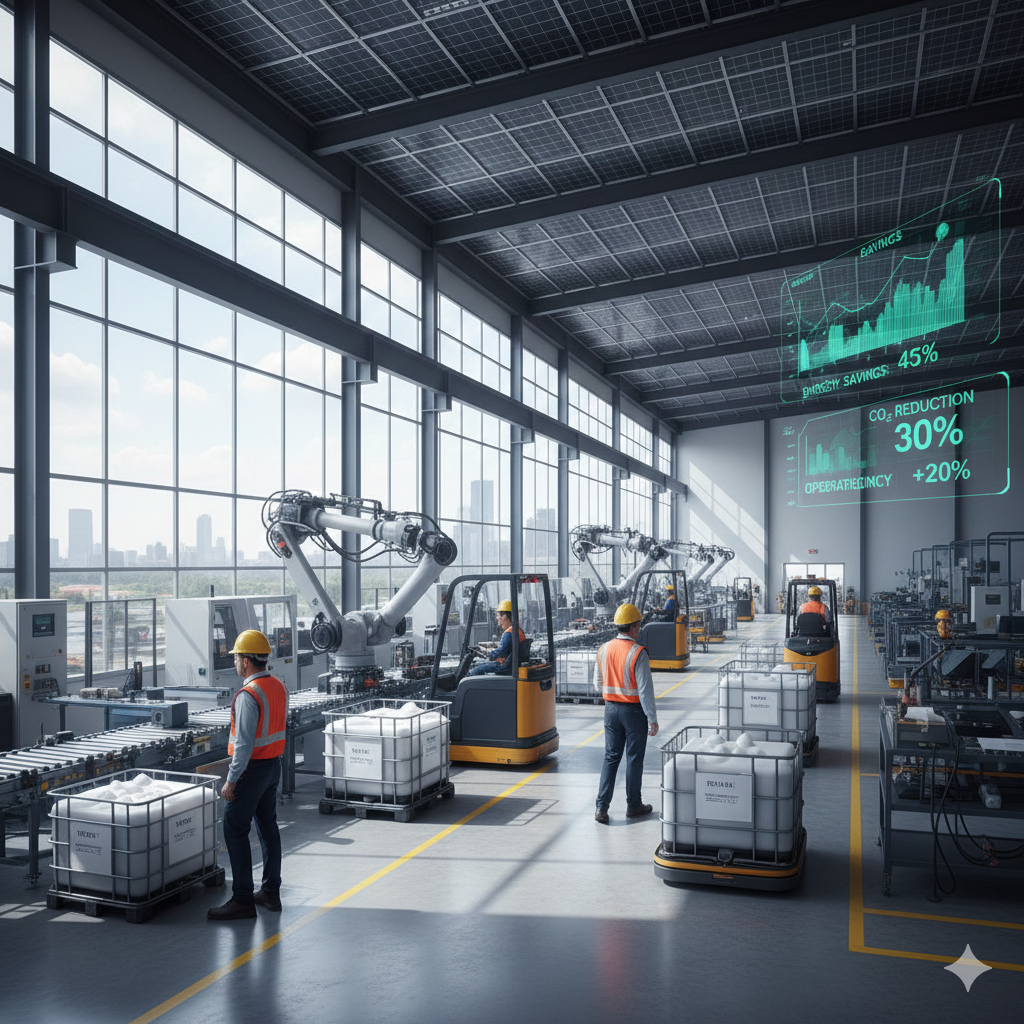
The U.S. electrical system is stressed by aging infrastructure and rising demand. Blackouts in California and Texas highlight vulnerabilities. Meanwhile, Mexico’s growing industrial demand and potential for renewable generation, including medium-voltage solar plants, positions it as a reliable source of energy and industrial competitiveness. Investors and multinational companies can leverage Mexico to secure energy supply, control costs, and reduce exposure to U.S. grid risks. (reuters.com)
Circular Economy Law and Renewable Energy Investment in Mexico
The newly published Circular Economy Law promotes sustainability, energy efficiency, and the adoption of renewables in industrial operations. Companies transitioning early gain predictable energy costs, regulatory compliance, and competitive advantage, aligning with global trends in Europe, the U.S., and Asia. (intersolar.mx)
Why Mexico Is One of the Most Attractive Energy Markets Globally
With high solar potential, strategic location, abundant labor, and access to U.S. supply chains, Mexico combines industrial capacity with energy self-sufficiency. Investors can deploy solar, hybrid, and medium-voltage solutions to produce their own electricity for manufacturing, warehouses, and commercial operations, achieving structural cost savings and energy security. (mexicoindustry.com)
Conclusion: The United States Must Cooperate
The evidence is clear: the United States needs Mexico. Threats, tariffs, and political pressure are counterproductive. Mexico is a strategic partner, not Greenland or Venezuela; it is a fully integrated industrial and energy hub, essential for North America’s competitiveness, energy security, and industrial future. Facing China, BRICS, and a shifting global order, cooperation is the only path forward.
LEASOL | Strategic Energy Advisory
In this context, LEASOL helps companies across Mexico:
- Reduce structural electricity costs
- Produce electricity for self-consumption in industrial operations
- Design medium-voltage solar and hybrid energy projects
- Analyze ROI and long-term energy strategy
- Operate nationwide with 15 years of experience
- Support companies recognized internationally
📩 Contact: lrios@leasol.com.mx
LEASOL — Energy as a strategic asset for industrial competitiveness.